Data loss is a massive threat that stops business operations immediately. When a server crashes or a cyberattack locks down your systems, your employees cannot work. Customer orders stop processing. Every passing hour drains revenue and severely damages your reputation.
The financial stakes are incredibly high for modern companies. The average cost of a data breach for U.S. companies reached a record $10.22 million in 2025. That kind of financial hit is enough to close a company’s doors permanently.
Many Cleveland businesses assume that securing their network requires a massive enterprise IT budget. They believe true disaster recovery means buying expensive servers and hiring full-time engineers. This is simply no longer the case.
The True Cost of Data Loss for Small Businesses
A dangerous misconception exists among many small to mid-size businesses (SMBs). Operators often assume hackers only care about targeting massive, multinational corporations. They think their operation flies under the radar of serious cybercriminals.
The reality is the exact opposite. Like in Cleveland, small businesses are prime targets for cyberattacks precisely because hackers assume they lack enterprise-level security. Criminals know that smaller companies typically have weaker defenses and fewer dedicated IT staff. They view your business as an easy target for a quick payday.
Industry data confirms this shift in criminal tactics. A recent industry report found that 85% of ransomware attacks specifically target small businesses. Criminals deploy automated scripts that scour the internet for vulnerable SMB networks, encrypting data the moment they find a way inside.
The Danger of Local-Only Backups
Many business owners think they have a solid safety net in place. They point to an external hard drive sitting next to the server or a secondary machine in the back office. This setup prompts a very serious question: When disaster strikes, is my current data actually protected, or just copied locally?
Local-only backups have critical flaws. If a fire breaks out in your building, the flames will destroy your main server and your backup drive simultaneously. The same applies to flooding, power surges, or simple hardware theft. Keeping your only safety net in the exact same physical location as your primary data is a recipe for total loss.
Cyber threats easily defeat local setups as well. When ransomware enters a network, it actively searches for connected drives to infect. A virus on your main network will quickly jump to your local backup drive, locking away your safety copy in seconds.
Relying on a single local hard drive leaves your business vulnerable to both physical disasters and sophisticated cyber threats. To ensure true business continuity without massive upfront hardware costs, many SMBs are turning to a custom data backup and recovery in Cleveland that supports secure storage, fast recovery, and scalable protection as their data needs grow.
Core Components of a Modern Data Backup Strategy
A reliable disaster recovery plan requires more than just copying files to a folder. It involves a systematic approach to saving, storing, and defending your information. Modern solutions rely on three essential pillars tailored specifically for the needs of SMBs.
The best part of these modern systems is their automation. These components work together in the background without any manual intervention. You get to focus entirely on running your operations, not managing complex IT tasks.
Continuous Data Protection vs. End-of-Day Backups
Old methods of data saving are completely obsolete today. In the past, companies relied on a single end-of-day backup scheduled for midnight. If your server crashed at 4:00 PM, you lost every single document, transaction, and email created since the doors opened that morning.
Modern systems use continuous data protection. Instead of waiting for a nightly schedule, the software automatically saves changes as they happen. It captures data in near real-time, syncing your files securely in the background while you work.
This completely minimizes operational downtime. If a mid-afternoon hardware failure takes down your local network, you do not lose a whole day of hard work. You can quickly restore your system to the exact state it was in just minutes before the crash occurred.
Redundant Offsite Data Centers
Redundancy is a core concept in professional IT management. Simply put, redundant offsite data centers mean keeping a complete backup file of your entire IT infrastructure securely stored in multiple, geographically separate locations. You are not relying on a single hard drive in your office closet.
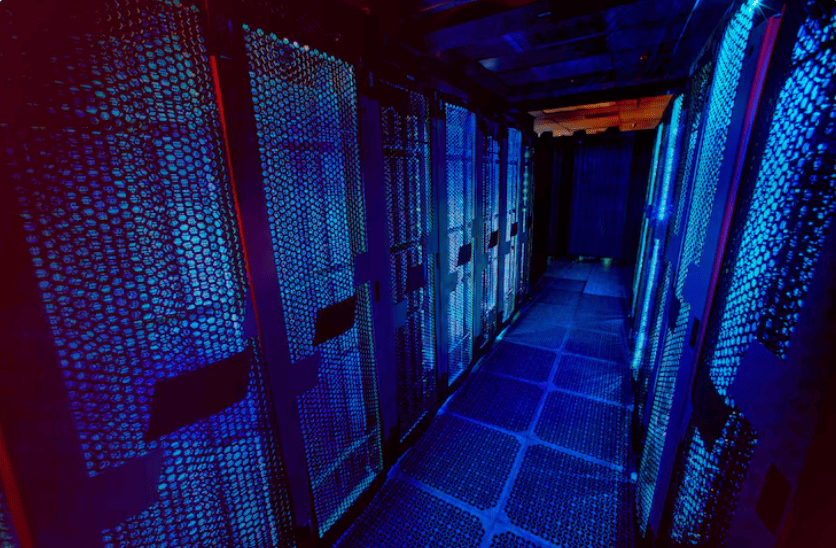
Your data is encrypted and sent securely to professional data centers. These facilities feature their own backup power generators, advanced cooling systems, and strict physical security. They are built to withstand catastrophic events.
The benefit of this geographic separation is absolute business continuity. Even if your physical office is completely destroyed by a natural disaster, your data survives safely offsite. You can spin up virtual versions of your servers from these remote data centers, allowing your team to log in and work from anywhere with an internet connection.
Integrated Threat Protection
Having an offsite backup is a great start, but you must defend that data from modern attacks. Hackers write malicious software designed specifically to hunt down and corrupt backup files. If you only have a basic storage system, a sophisticated attack can destroy your final safety net.
This is a very common scenario for targeted companies. Data gathered recently highlights the scope of the problem, showing that 88% of SMB breaches involved ransomware. Criminals know that if they can encrypt your backups, you have absolutely no choice but to pay their ransom demands.
Cleveland’s modern backup solutions are bundled with state-of-the-art virus and malware defense. Advanced systems actively monitor your data for suspicious activity. If they detect the early signs of a ransomware encryption attempt, they automatically block the threat and isolate the infected files, ensuring your backup archives remain pristine and ready for recovery.
Conclusion
Small businesses no longer have to choose between financial stability and enterprise-grade data security. The technology required to defend your company is more accessible and affordable than ever before. You simply need to adopt the right structural approach to your IT management.
Shifting to a predictable monthly OpEx model removes the burden of managing physical hardware. It provides you with continuous, offsite, and secure protection that works quietly in the background. This method effectively guards your operations against physical disasters, hardware failures, and aggressive cyber threats.
 Keshian Bakerstell is a talented article writer and a unique voice at Your Local Insight Journal. Her writing brings a fresh perspective to the platform, capturing the essence of the Lansing, MI community with insight and creativity.